Last updated: 2026. Anchors recommended for UK outdoor use, covering concrete, tarmac, and wall installations. Includes advice for renters who need landlord permission before fitting.
The short version: A ground anchor is the single most effective thing you can add to your motorcycle security setup. It turns a bike that can be lifted and loaded in under a minute into one that requires sustained, noisy effort to move. Every anchor on this list is Sold Secure rated, which means it has been independently tested and passed. That rating is also what most insurers want to see before they offer a meaningful premium reduction.
Ground anchors are not complicated products, but choosing the wrong type for your surface or situation is a common and frustrating mistake. This guide covers five options at different price points, explains which surfaces each suits, and includes a section specifically for renters who need to work with a landlord before picking up a drill.
Here is what actually matters when choosing a ground anchor for outdoor use in the UK:
- Sold Secure rating. Gold or Diamond. Anything below this has not been tested to a standard that most insurers recognise, and a thief with the right tools will like defeat it more quickly. Sold Secure Diamond is the highest rating available and represents the current benchmark for serious motorcycle security.
- Surface compatibility. Concrete and tarmac are very different materials. Some anchors work well in both; others are specifically designed for one. Paving slabs are not suitable for most ground anchors at all — the slabs themselves, not the anchor, become the weak point.
- Installation type. Bolt-down anchors are drilled and bolted to the surface and are the most practical option for driveways and outside use. Concrete-in anchors are set into a freshly dug hole and surrounded with concrete — more work to install, but essentially permanent once set. Wall anchors fix vertically to a wall rather than a floor surface, which is often the better option for side passages or anywhere the floor is not suitable.
- Chain aperture size. The hole or loop that your security chain passes through needs to accommodate the chain you actually have or plan to buy. High-security chains run from 12mm to 19mm in diameter. Check the aperture dimensions before buying. The chain you run through your anchor matters as much as the anchor itself; see our guide to the best motorcycle chains and locks for Sold Secure-rated options that match these anchor aperture sizes
- Anti-tamper bolt protection. Once an anchor is installed, the fixing bolts should be inaccessible to an attacker. The best anchors achieve this with anti-tamper ball bearings hammered into the bolt heads, or with the bolt heads concealed by the anchor body itself.
- Profile. Flush-fit and low-profile anchors are harder to attack with leverage and present less of a trip hazard. Some anchors sit several centimetres proud of the surface; others fold or retract flush when not in use.
With those criteria in mind, here are the five covers that stand out for UK outdoor use.
* Affiliate links. If you buy via these links, we earn a small commission at no extra cost to you.
1. Torc Mega Series III: Best Overall
💰 ~£70–£120 | 🏆 Sold Secure Motorcycle Diamond | ⚓ Floor or wall
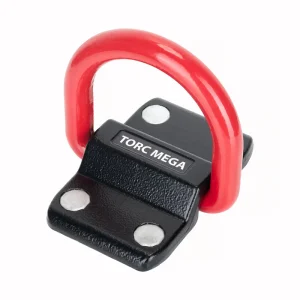
The Torc Mega Series III is the ground anchor that comes up most consistently when experienced riders talk about what they actually use. Another great product from Pragmasis. It has held Sold Secure Diamond status through multiple testing cycles, and the construction quality is immediately obvious when you pick it up — it weighs around 4kg and the 22mm forged shackle makes the purpose entirely clear.
The design is a fully forged shackle anchor rather than the double-plate design used by some competitors. The shackle swings open to accept a chain and closes back down, keeping the chain tight against the anchor body and reducing the gap available to insert bolt croppers or cutting tools. The chain aperture accommodates chains up to 25mm, which covers every high-security motorcycle chain currently available, including the heaviest options from Pragmasis and Squire.
What makes the Torc genuinely practical for outdoor driveway use is the range of installation kits available separately. You can specify the kit for your exact surface — concrete floor, brick wall, block wall, or an injection resin option that works in existing tarmac without breaking it up first. Drill bits are included with most kits, which is a small but appreciated detail. It can be fitted to a floor or to a wall, which gives useful flexibility depending on where your bike sits.
The one limitation worth noting: Torc specify it is not suitable for paving slabs or block paving as a floor anchor, because the slabs themselves are not strong enough to hold the fixing loads. If your driveway is block paving, a wall anchor installation is the correct solution, and the Torc supports that.
✓ Pros
- Sold Secure Diamond — highest rating available
- 22mm forged shackle, accommodates up to 25mm chains
- Floor or wall installation options
- Surface-specific installation kits available
- Drill bits included with most kits
- Compact profile, does not protrude excessively
✗ Cons
- Not suitable for block paving or paving slabs as a floor anchor
- Installation kits purchased separately add to the total cost
- Requires an SDS drill for concrete — a standard combi drill will struggle
Verdict:
The most consistently recommended ground anchor among UK riders who have thought seriously about security. The Sold Secure Diamond rating, the shackle design, and the range of installation options make it the right answer for most concrete or brick wall situations. If you are only buying one anchor and your bike has any real value, this is the one to buy.
2. Insight Security BigBoy3: Best for Flush-Fit Driveways
💰 ~£80–£185 | 🏆 Sold Secure Motorcycle Diamond | ⚓ Concrete-in, flush fit
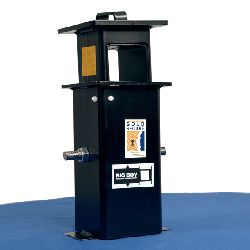
The BigBoy3 is a different type of anchor from anything else on this list. It is a telescopic, concrete-in anchor that, once installed, sits completely flush with the ground surface. When not in use, you would not know it was there. When you need it, you pull up a finger-lift handle and the inner section rises to reveal an 80mm chain guide through which your security chain passes. When the bike is out, the anchor folds back down to ground level.
This design solves a real problem for riders with driveways that are used by multiple vehicles or where a protruding anchor would be a practical nuisance. Because the top plate is flush, it can be safely driven over when the anchor is folded down. It is also a harder target for a thief to attack, because there is nothing visible or accessible to lever against before the anchor is in use.
The installation is more involved than a bolt-down anchor. The BigBoy3 is a concrete-in product, which means digging out or breaking up the existing surface to the required depth and setting the anchor body in concrete. It is a one-time job, but it is a more significant commitment than drilling four holes and bolting down a plate. Once set, it is essentially impossible to remove without heavy equipment. Insight Security provide a detailed installation guide, and for most riders the job is manageable over a weekend with the right tools.
The 80mm chain aperture accepts chains up to 19mm sleeved diameter, covering the full range of high-security chains. Hi-viz reflector pads on the telescopic section provide night visibility when the anchor is raised.
✓ Pros
- Sold Secure Diamond rated
- Flush fit — no trip hazard, can be driven over
- Concealed when not in use, harder to scope and attack
- 80mm chain aperture takes up to 19mm chains
- Hi-viz reflectors for night use
- Extremely difficult to remove once set in concrete
✗ Cons
- Concrete-in installation is a significant undertaking
- Not suitable for rented properties without permanent changes
- Higher price than bolt-down alternatives
- Requires breaking up existing surface during installation
Verdict:
The best option for riders who own their property, have a concrete driveway, and want a permanent, maximum-security solution that does not look like a security product from the road. The flush-fit design is genuinely clever. Not the right choice if you rent or if a permanent installation is not possible.
3. Oxford AnchorForce: Best Bolt-Down Value
💰 ~£40–£60 | 🏆 Sold Secure Motorcycle Diamond | ⚓ Floor or wall
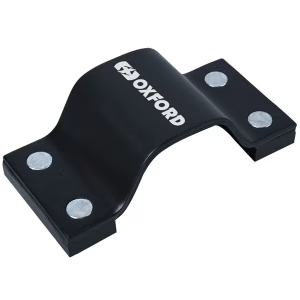
The Oxford AnchorForce is the most widely available Sold Secure Diamond rated anchor in the UK, stocked by virtually every motorcycle accessories retailer online and in-store. It uses a double-plate bolt-down design: two thick layers of hardened steel are bolted to the ground one on top of the other, and the chain passes through the gap between them and underneath both plates. There is no protruding shackle, which means there is no obvious point for a thief to apply leverage or insert a cutting tool.
The installation uses four high-security expansion bolts, and once the bolts are set, anti-tamper ball bearings are hammered into the bolt heads to prevent them from being unscrewed. The result is an anchor that is both genuinely secure and essentially permanent once installed — reviewers note that once it is in, it is in for good. The open channel design also means it will comfortably accommodate multiple chains if you have more than one bike to secure from the same point.
It can be fitted to concrete floors and concrete or brick walls. Like the Torc, it is not suitable for paving slabs as a floor surface. Oxford supply all fixings and instructions in the box. One practical note: the bolt holes require a 16mm masonry bit and a reasonably powerful drill. An SDS drill will make the job straightforward; a standard cordless combi drill will manage it in concrete but will work hard to do so.
Oxford are a known, widely trusted brand in the UK motorcycle market, and the AnchorForce has been insurance-approved for years. If you already ride with Oxford chains or locks, it is a natural pairing.
✓ Pros
- Sold Secure Diamond — highest rating
- Double-plate design eliminates exposed shackle
- All fixings and instructions included
- Insurance approved
- Wide chain aperture — suits multiple chains simultaneously
- Widely available, competitively priced
- Floor or wall installation
✗ Cons
- Not suitable for block paving or paving slabs
- Open design means chains have slightly more accessible attack surface than a shackle anchor
- Requires 16mm bit and a decent drill
- Essentially permanent once installed
Verdict:
The most accessible Sold Secure Diamond anchor for most UK riders. Competitively priced, widely available, and the double-plate design is both effective and tidy. A reliable default choice for anyone with a concrete floor or wall and a drill.
4. Y Anchor Original: Best for Tarmac Driveways
💰 ~£50–£70 | 🏆 Sold Secure Motorcycle Diamond | ⚓ Concrete, tarmac, block paving
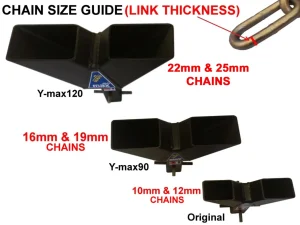
The Y Anchor is a British-designed ground anchor that has been through Sold Secure's most rigorous testing and holds Diamond rating across multiple categories. It is particularly worth highlighting for one reason: it is designed to work in tarmac as well as concrete, using a combination of fixing methods that includes options specifically suited to tarmac driveways. For riders whose driveway is tarmac rather than concrete — which is extremely common in UK residential properties — this opens up installation options that some competing anchors do not support.
The anchor body is a U-shaped steel loop fixed at both ends into the ground or wall surface, with the chain passing through the loop. The design is robust and compact, and the Y Anchor range includes three sizes to accommodate different chain diameters: the Original suits 10mm and 12mm chains, the Y-max90 is designed for 16mm and 19mm chains, and the Y-max120 accommodates 22mm and 25mm chains. Match the anchor to the chain you intend to use.
Installation kits are available for concrete floor, tarmac, paving, brick wall, and block wall surfaces — notably, paving options are available here where some other anchors do not support them. The company provides detailed guidance on which kit to use for which surface, and customer support is consistently praised in reviews. Wall fixing kits are well designed and suit narrow side passages or locations where floor installation is not practical.
✓ Pros
- Sold Secure Diamond across multiple categories
- Designed and tested for tarmac as well as concrete
- Three size variants to match chain diameter
- UK-based company with strong customer support reputation
- Compact, low-profile design
✗ Cons
- Less widely stocked than Oxford — usually bought direct or via specialist retailers
- Need to select the correct size variant for your chain — easy to get wrong
- Installation kits sometimes purchased separately
Verdict:
The most practical choice for tarmac driveways, which are widespread in UK residential areas. If your driveway surface has ruled out other anchors, the Y Anchor's surface-specific installation options make it the right place to look.
5. Oxford Brute Force: Best Budget Entry Point
💰 ~£20–£30 | 🏆 Sold Secure Silver | ⚓ Floor or wall
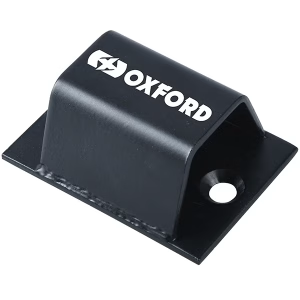
Not every bike warrants a £90 anchor, and the Oxford Brute Force exists for exactly those situations. It is Sold Secure Silver rather than Gold or Diamond, which means it has been independently tested but to a lower standard — it will resist opportunistic attack and basic tools, but should not be treated as equivalent to the higher-rated options above if your bike has significant value.
For a commuter, a learner bike, or a second bike that you are not especially worried about but want to make marginally harder to steal, the Brute Force does the job. It is hardened steel, it bolt-fixes to floors or walls, the bolts are protected by anti-tamper ball bearings once installed, and it accepts chains up to 12mm. It is genuinely better than nothing and meaningfully better than a chain secured only to itself.
Installation follows the same pattern as the AnchorForce — drill the holes, set the expansion bolts, hammer in the ball bearings. Oxford supply all fixings. The process is straightforward and the smaller size means the drill demands are slightly lower than the larger anchors.
One honest caveat: it is worth being clear-eyed about what Sold Secure Silver means in practice. The Brute Force will defeat a casual attempt and slow down most opportunistic thieves. A determined thief with power tools will defeat it. If your bike is worth more than a few hundred pounds, spend more on the anchor. If you are adding a budget layer to a bike that lives on a driveway alongside a disc lock and a cover, it earns its place.
✓ Pros
- Sold Secure Silver — independently tested
- Hardened steel construction
- Very affordable — easy to justify on lower-value bikes
- All fixings included
- Floor or wall installation
- Compact and unobtrusive
✗ Cons
- Silver rating only — not equivalent protection to Gold or Diamond anchors
- 12mm maximum chain diameter limits options
- Not suitable as the sole security for a higher-value bike
Verdict:
The right entry-level option for lower-value bikes or as an additional anchor alongside other security measures. Do not use it as the only security on a bike worth stealing. For everything else, it is a sensible, affordable starting point that is vastly better than no anchor at all.
A ground anchor is most effective as part of a layered setup. Paired with a Sold Secure-rated chain, it removes the lift-and-load attack entirely — the most common method used on driveways. Add an alarmed disc lock for a noise layer, and a cover to remove the bike from casual view. For the full driveway security picture, see our motorcycle security on a driveway guide.
Quick Comparison
| Anchor | Price Range | Sold Secure | Type | Surfaces | Best For |
|---|---|---|---|---|---|
| Torc Mega Series III | £90–£120 | Diamond | Bolt-down shackle | Concrete, brick wall | Best overall |
| BigBoy3 | £90–£185 | Diamond | Concrete-in, flush | Concrete only | Permanent driveway install |
| Oxford AnchorForce | £40–£60 | Diamond | Bolt-down double plate | Concrete, brick wall | Best value Diamond |
| Y Anchor | £50–£70 | Diamond | Bolt-down U-loop | Concrete, tarmac, paving | Tarmac driveways |
| Oxford Brute Force | £20–£30 | Silver | Bolt-down plate | Concrete, wall | Budget / lower-value bikes |
If You Rent: Getting a Ground Anchor Approved by Your Landlord
Installing a ground anchor requires drilling into your landlord's property. That is a structural modification, and most tenancy agreements require written permission before any such work is carried out. Doing it without asking is a breach of your tenancy and can result in costs being deducted from your deposit when you leave.
That said, most landlords will agree to a ground anchor request if it is put to them properly. The key is framing it correctly. From a landlord's perspective, the concerns are likely to be: will this damage the property, who pays for it, and what happens when you leave? Address those questions clearly and up front, and most reasonable landlords will say yes.
If you rent and a permanent anchor isn't possible, your best alternative is a heavy-duty chain run through the bike's frame and around a fixed point — see our chain guide for portable options that don't require installation.
How to Ask Your Landlord
The request should be made in writing ( email is fine ) and should cover a few specific points:
- What you want to install and why. Explain briefly that you want to fit a ground anchor to secure your motorcycle. Name the specific product and its Sold Secure rating. Mentioning that insurers recommend or require this kind of security helps frame the request as responsible rather than recreational.
- What the installation involves. Be honest: it requires drilling holes in the concrete or fixing bolts to a wall. Explain the size and footprint of the anchor. For a flush-fit telescopic anchor, point out that it is invisible at ground level when not in use. For a bolt-down anchor, a photograph or product link helps the landlord visualise what they are agreeing to.
- Who will do the work. If you are doing it yourself, say so and mention that you will follow the manufacturer's installation instructions. If you are willing to have it done professionally, offer that. Either way, confirm that it will be done properly.
- What happens when you leave. This is often the landlord's biggest concern. Offer to either leave the anchor in place (which improves the property's security for future tenants) or to have the holes professionally filled and made good when you leave. Either option is reasonable. Leaving it in place is often the more attractive offer, since a Sold Secure Diamond anchor is a genuine asset to the property.
Keep the message short and practical. Landlords respond better to a clear, factual request than a lengthy justification. Something like the following covers the ground:
I'd like to request permission to install a motorcycle ground anchor on the driveway. The anchor I have in mind is the [product name], which is Sold Secure Diamond rated — the highest independent security certification available in the UK. Installation requires drilling four holes in the concrete and fitting expansion bolts; the anchor itself sits flat to the ground when not in use. I'm happy to carry out the work myself following the manufacturer's instructions, and when I eventually leave the property I'd suggest leaving the anchor in place, as it adds security value for future tenants. If you'd prefer the holes filled, I'm happy to arrange that too. Please let me know if you have any questions.
If Your Landlord Says No
Some landlords will decline, either on principle or because they are not sure what they are agreeing to. If a direct installation is not possible, there are practical alternatives that do not require any drilling:
- Heavy portable anchors. Products like the Ground Hog, a substantial dead-weight anchor that sits on the surface and is secured with a chain and lock, do not require any installation. They are not as secure as a fixed anchor, but they are considerably more secure than a chain locked only to the bike. They are also portable, which means you take them with you when you move.
- Chain through the bike behind a car. Parking your car directly in front of the bike removes the ability to van-lift it, which accounts for a significant proportion of motorcycle thefts. A chain through the rear wheel and through a wheel or tow point of the car adds a fixed point without any drilling.
- Wall anchor on a fence post or outbuilding. If there is a garden wall, outbuilding, or substantial fence post, some landlords will agree to a surface-mount wall anchor even if they decline a floor anchor. The disruption is minimal and the installation is reversible. Worth asking as a follow-up.
- Rear garden storage. If the property has a rear garden shed or outbuilding, a ground anchor inside that structure may be more readily approved than a visible installation on the front driveway.
A Note on Deposits and Documentation
Whatever you agree, confirm it in writing before any work begins. An email reply from your landlord saying "yes, that's fine" is sufficient. Keep a copy. This protects you both when the tenancy ends — you have proof of what was agreed and cannot be charged for work the landlord explicitly permitted.
If your landlord agrees and you want to be thorough, a short addendum to your tenancy agreement noting the installation and what is agreed at the end of the tenancy provides even clearer protection. Most landlords will not object to this and it removes any ambiguity later.
Things Worth Knowing Before You Buy
The anchor is only as strong as the surface it is fitted to
This is the most frequently misunderstood aspect of ground anchor installation. A Sold Secure Diamond anchor in crumbling concrete or weak tarmac provides much less protection than its rating implies, because the surface itself — not the anchor — becomes the point of failure. Good concrete, properly set, is the ideal. Tarmac varies enormously in depth and quality. If your surface is not solid, spend time understanding which anchors and installation methods are suited to it before buying.
Paving slabs deserve a specific mention: most anchor manufacturers explicitly state their products are not suitable for floor installation in paving slabs. The slab can be lifted, levered, or broken around the anchor. If your driveway is block paving or traditional paving slabs, a wall anchor is almost always the better option.
Match the anchor rating to the chain rating
There is no security benefit in fitting a Sold Secure Diamond anchor with a Sold Secure Bronze chain, or vice versa. A thief will always attack the weakest point in the system. The chain and anchor should be matched in rating, and both should be rated at least Sold Secure Gold. Diamond throughout is the goal for a high-value bike.
Keep the chain off the ground
A chain lying on the ground can be attacked with a hammer and chisel, or given enough slack to be cut against the floor surface. When threading your chain through the anchor, take up as much slack as possible and ensure the chain loop sits above the ground. This is a small point that meaningfully affects how difficult the chain is to attack.
Declare the anchor to your insurer
A ground anchor — particularly a Sold Secure Gold or Diamond rated one — will typically reduce your insurance premium. It will not reduce it if you have not declared it. When you take out or renew your policy, include the anchor make, model, and Sold Secure rating in the security details. Some insurers will ask for a certificate number, which is available from the Sold Secure website or the anchor manufacturer.
Installation day tips
Use an SDS drill rather than a standard cordless combi if you can borrow or hire one. Drilling into concrete with a standard drill is possible but slow and hard on batteries. An SDS drill does the same job in a fraction of the time. Most anchor manufacturers specify the drill bit diameter required; read the instructions before starting. Drilling in dry weather makes the job easier, particularly if you are working outside. If the anchor comes with a template, use it — getting the hole spacing wrong means starting again.
Summary
For most UK riders with a concrete driveway or accessible wall, the Torc Mega Series III is the right choice — Sold Secure Diamond, a sensible shackle design, and genuine flexibility in how it is installed. If you want something completely invisible from the road and are willing to put in a more involved installation, the BigBoy3 is the premium option. The Oxford AnchorForce delivers Diamond protection at a lower price and is widely stocked. If your driveway is tarmac, the Y Anchor has been specifically designed for that surface and is worth the extra research. And for a lower-value bike or an additional anchor point, the Oxford Brute Force is a sensible, affordable starting point.
Whichever you choose: match the chain rating to the anchor, keep the chain off the ground, and declare it to your insurer.
Found this useful? The rest of this site covers motorcycle security for riders without a garage in more detail, including a guide to driveway security, the best motorcycle covers, and insurance for bikes stored outside.