
Practical advice for riders who store their bike outside, on a driveway, or on the street.

A couple of years ago I persuaded two of my colleagues to get into motorcycling. One of them had a garage, passed his test, and within a few weeks was insured and riding the bike he had always wanted. The other, a more experienced person than either of us in many ways, had no garage and no access to his back garden. His bike had to live on the driveway.
What followed was months of frustration. Insurance companies were difficult, some refusing to quote at all. Finding the right security setup took real effort and a fair amount of trial and error. Simple things like keeping the bike dry and protected without a covered space to put it in turned out to be more involved than anyone had warned him.
He got there in the end, starting with a Honda Rebel 500 and eventually navigating his way to a bike he is genuinely happy with. But the process was harder than it needed to be, and most of the useful information was scattered across forums, insurance small print, and hard-won personal experience.
That is why this site exists. If you are storing a motorcycle outside in the UK without a garage, whether on a driveway, a side passage, or the street, this is the practical information that took us a while to piece together, written in one place.
The core reality: Storing a bike outside is completely normal in the UK and entirely manageable. The goal is not to make your bike impossible to steal, that is unrealistic. The goal is to make it inconvenient, time-consuming, and noisy enough that a thief moves on to an easier target. Most do.
Why Outside Storage is a Different Problem
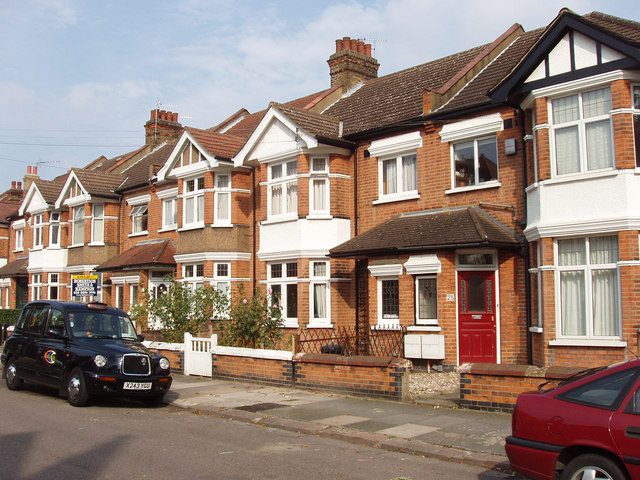
It is worth being clear about what you are actually up against, because most motorbike security advice is written with a garage in mind. Lock it up, put it away, done. Outside storage is a different challenge for a few reasons.
Your bike is visible. Anyone walking or driving past can see what you have got, assess how it is secured, and come back when it suits them. Most motorcycle theft in the UK is planned rather than opportunistic. Two or more people, a van, and a well-observed target. If security is weak, a bike can be lifted and loaded in under a minute.
Your anchoring options are limited. In a garage you can bolt a ground anchor into a concrete floor and call it done. On a driveway or in a side passage it depends entirely on what surface you have, whether you own the property, and whether your landlord or neighbours have anything to say about it. Many people storing bikes outside are working with less than ideal options.
Weather is a constant. A garage protects a bike from rain, frost, UV damage, and condensation. Outside, all of those things work on your bike every single day. A cover helps considerably, but it is not the same as a roof.
Insurance is more complicated. Insurers have specific expectations about declared storage locations and security levels. Getting this wrong, even accidentally, can affect a claim. Some insurers are more difficult about outside storage than others, and the difference in premium between a well-secured driveway and a poorly secured one can be significant.
None of this is insurmountable. But it helps to understand what you are dealing with before you start buying kit.
If you are lucky enough to have a driveway there is a specific guide here to securing your pride and joy.
If you live in a flat there are still positive steps you can take which are covered in our No Driveway, No Garage guide.
Typical UK House Layouts and What They Mean for Motorbike Security
Where exactly your bike sits matters quite a bit. Each common setup has different strengths and weaknesses.
Front driveway
The most common setup. Visible from the road, which cuts both ways. Natural surveillance from neighbours and passers by can deter thieves, but it also means your bike is easy to observe and assess. Best option if properly secured with an anchor and chain. Full driveway security guide →
Side passage
Often the best option if you have one. Less visible from the road, access is naturally restricted if the passage is narrow, and wall anchors are usually an option if a ground anchor is not. The main risk is that it can feel safer than it is if the gate or entrance is weak.
Front garden
Similar to a front driveway but often softer ground, which limits anchor options. Slightly more concealment from a plain cover, but still fully visible. Worth thinking carefully about what you can secure the bike to.
Rear garden
Feels the safest and is the least visible, but is often the least well secured in practice. Access through a side gate or alley can actually give a thief more privacy to work. Do not rely on concealment alone.
The Layered Security Principle (What Actually Works) for Motorbikes in the UK
No single device is enough. A chain can be cut. A disc lock can be defeated. An alarm can be ignored. What makes a bike genuinely difficult to steal is combining several layers, each of which takes time, effort, or noise to overcome. Thieves work quickly and abandon targets that slow them down or draw attention.
Think of it in four layers, applied in order of importance
1. Immobility
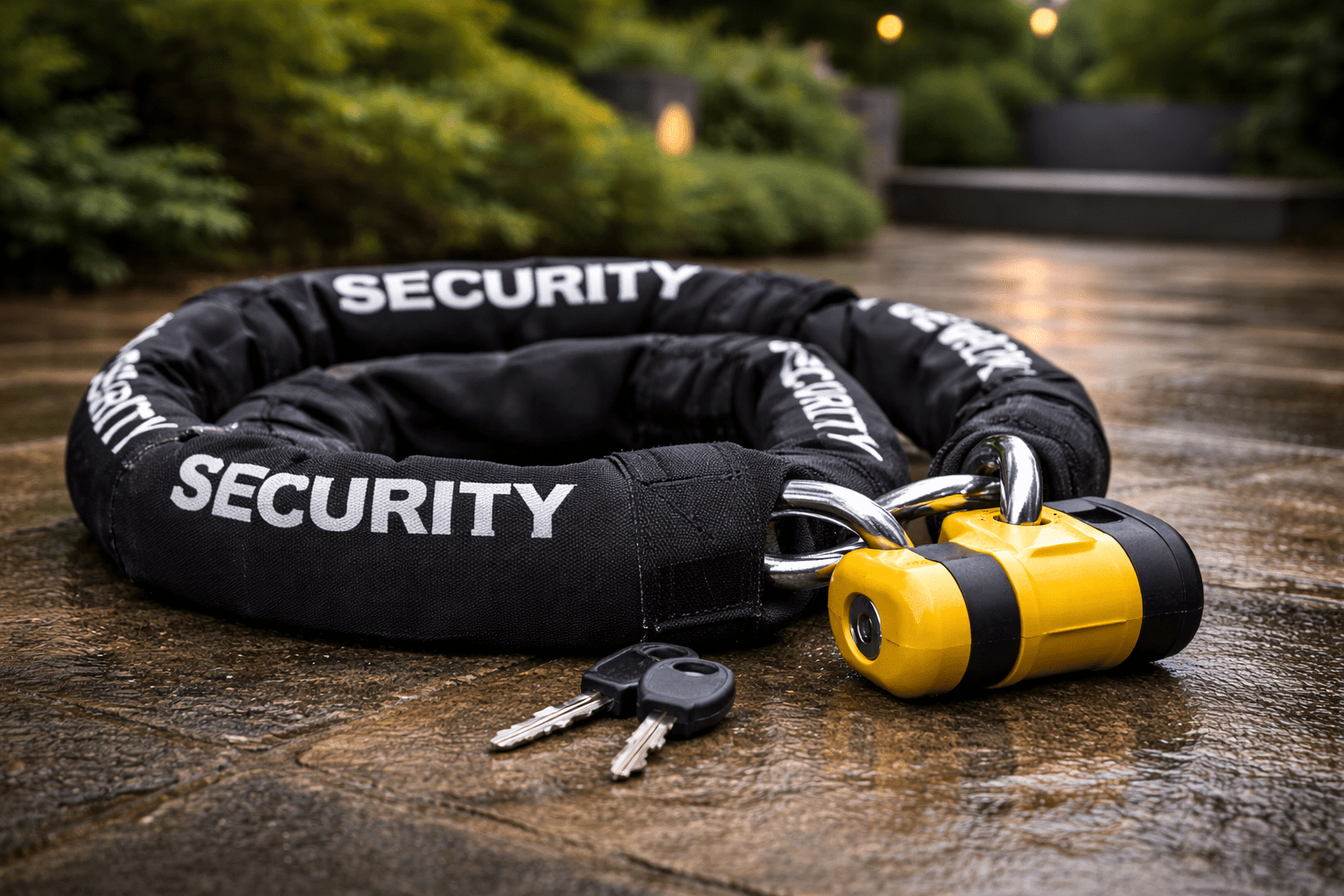
The most important layer. A bike that cannot be moved cannot be stolen easily. This means a ground anchor or wall anchor combined with a substantial chain run through the frame or rear wheel. The chain should be taut and off the ground so it cannot be hammered against a surface for cutting. If you have concrete or tarmac, a ground anchor bolted in properly is the gold standard. If you do not, wall anchors attached to the property are a legitimate alternative that many people use effectively.
If anchoring is not possible at all, boxing the bike in behind your car at least defeats the lift-and-load method, which accounts for a significant proportion of motorbike thefts. It is not perfect, but it raises the effort required considerably.
See our guide to the best ground anchors for outdoor storage →
2. Noise
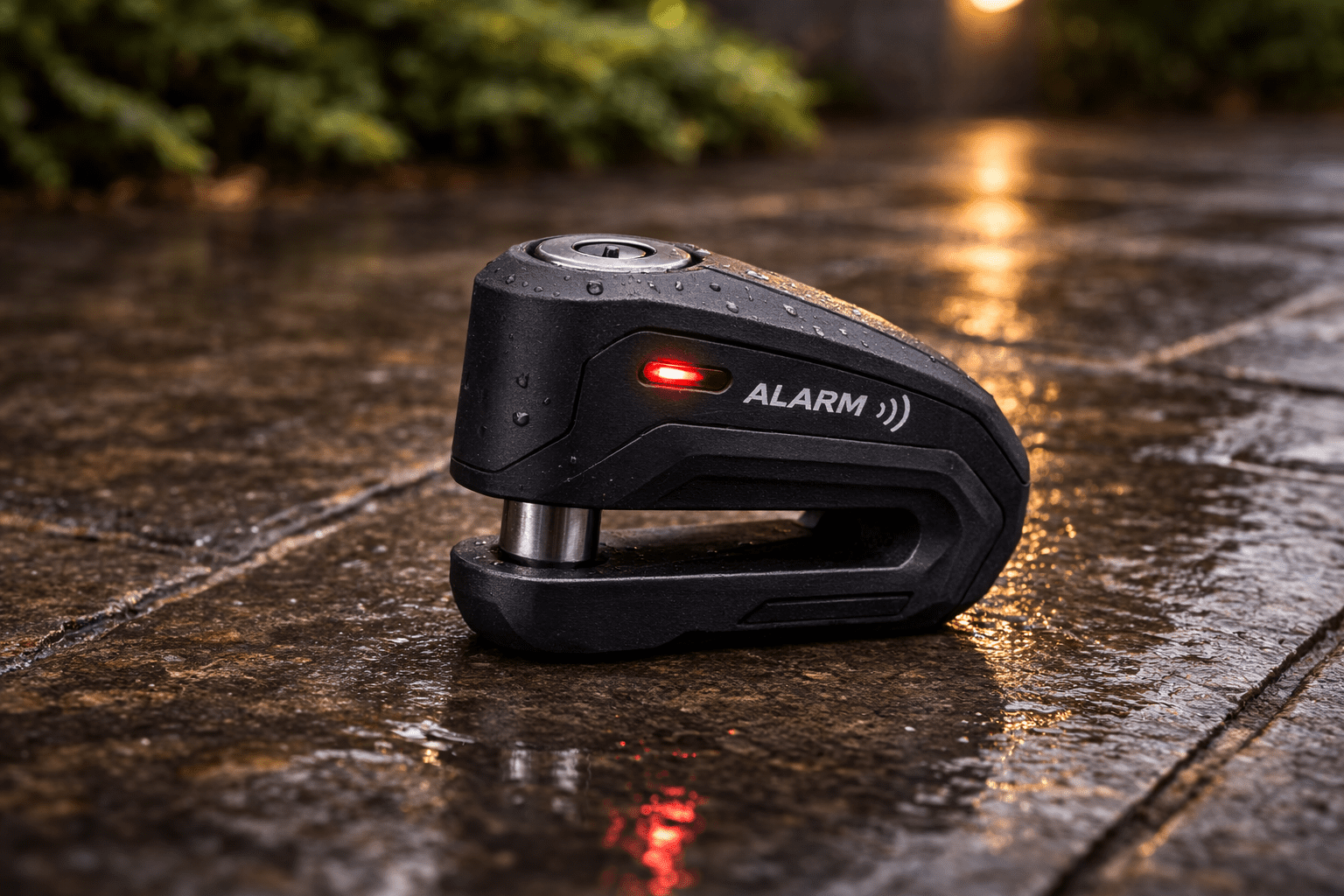
An alarmed disc lock is the most practical noise layer for outside storage. It sits on the brake disc and triggers a loud siren if the bike is moved or interfered with. It will not stop a determined thief on its own, but combined with immobility it means any attempt to cut or move the bike happens with a screaming alarm drawing attention. Most thieves will not risk it.
See our guide to the best alarmed disc locks for UK riders →
3. Concealment
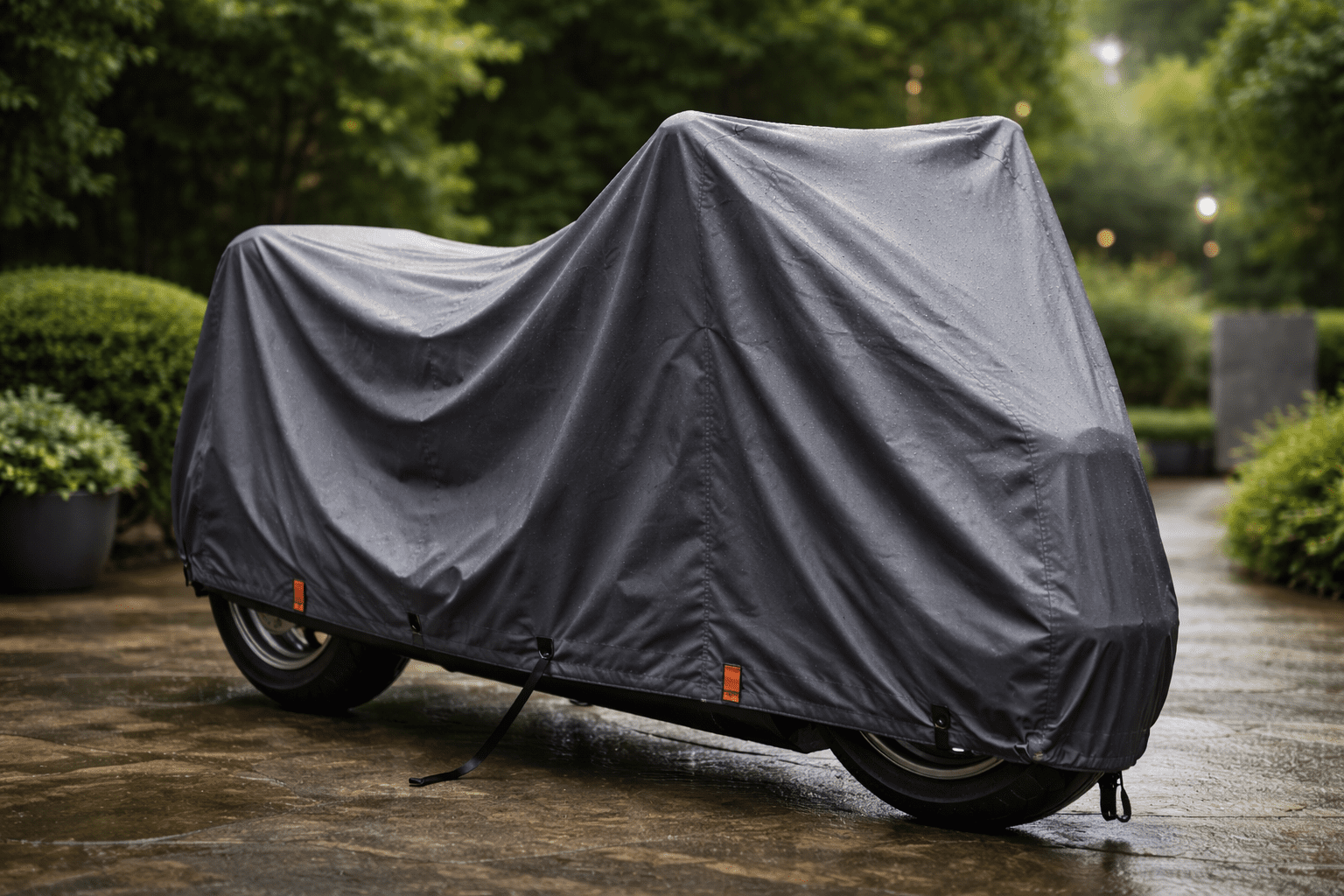
A plain, unbranded motorbike cover does two useful things. It protects the bike from weather, and it hides what is underneath. A professional thief often scopes a target in advance, noting the make, model, and visible security. A plain grey or black cover that could be hiding anything from a brand new adventure bike to a battered old commuter removes that information entirely. The double cover trick is worth knowing: a decent weatherproof cover underneath, and a cheap, dirty, unloved-looking cover on top. Make the bike look like something nobody would bother stealing.
See our guide to the best motorcycle covers for outdoor storage →
4. Visibility Management
Motion-activated lighting aimed at where the bike is stored is cheap and effective. Thieves work better in the dark. A light that fires when someone approaches the bike makes the whole operation riskier and more visible. CCTV or a visible camera adds to this. Neither will stop a theft in progress, but both change the risk calculation for anyone considering it.
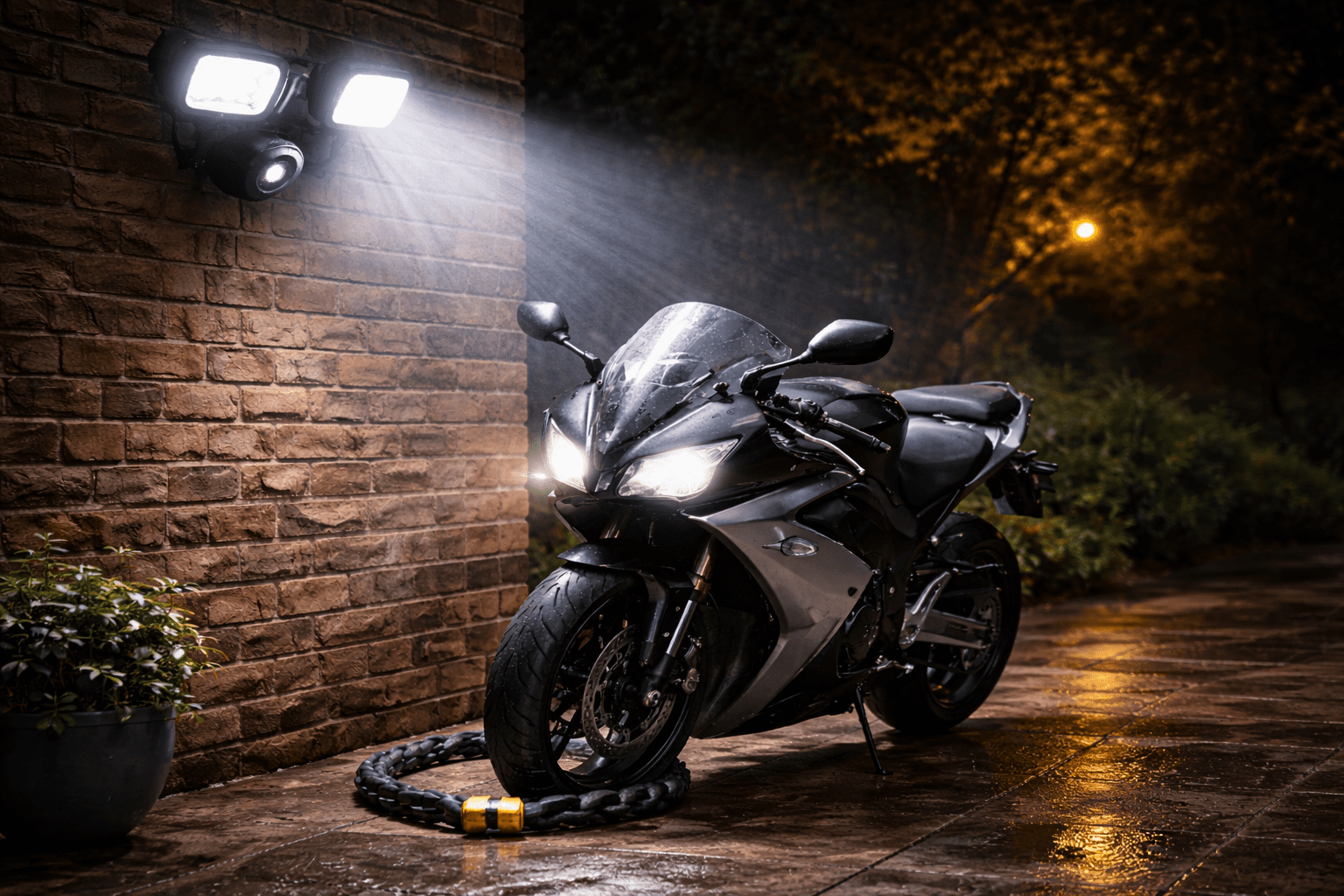
Effectively we're making any would be thief either unaware of our bike or completely aware of it's protection. We want to make their life as awkward and uncomfortable as possible. Convince them that it's not worth the time and effort.
What Insurers Really Care About
Insurance for bikes stored outside can be frustrating, and it is worth understanding what insurers actually look at rather than assuming the worst. The experience of getting a bike insured on a driveway without a garage varies enormously between insurers, and some are considerably more helpful than others.
Most insurers care primarily about three things. Whether the bike was locked. Whether the security you used matched what you declared on the policy. And whether the bike was secured to something fixed rather than just locked to itself. Getting those three things right, and being honest about your storage situation when you take out the policy, covers most of the bases.
What they generally do not refuse to insure is a bike on a driveway or outside storage, provided the security is reasonable and declared correctly. The difficulties usually come from either under-declaring the security setup, over-declaring it, or choosing an insurer that specialises in garage storage and is simply not set up to deal with outside storage sensibly.
The other thing worth knowing is that declared security affects your premium. A bike with a Sold Secure rated chain, a ground anchor, and an alarm will attract a meaningfully lower premium than the same bike with a basic lock. The cost of good security often pays back in lower insurance costs within the first year.
Full guide to motorcycle insurance for bikes stored outside →
Cost vs Protection (Be Honest)
- £200 bike? Over‑securing makes little sense
- £8,000 bike? £300–£500 in security is reasonable
Security should be proportionate, not obsessive.
How Much Security Do You Actually Need?
This is worth being honest about, because it is easy to either over-invest in security for a bike that does not warrant it or under-invest in security for one that does.
| Bike value | Reasonable security budget | Minimum setup |
|---|---|---|
| Under £1,000 | £50–£100 | Decent chain and lock, plain cover |
| £1,000–£3,000 | £100–£200 | Chain, ground or wall anchor, alarmed disc lock, cover |
| £3,000–£6,000 | £200–£350 | Above, plus motion lighting, consider GPS tracker |
| Over £6,000 | £350–£500+ | Full layered setup, Sold Secure rated equipment throughout, GPS tracker |
Security should be proportionate, not obsessive. A £400 chain on a £600 bike makes no financial sense, unless that £600 bike is sentimental. But under-securing a bike you love and rely on is a false economy that tends to end badly.
My personal observation is that anything to do with motorcycles always costs £300. Want a new helmet, that's £300. Need a rucksack, £300. Want some jeans with AAA protection, guess how much! Sometimes it does feel like we're being treated as a bank. However, all disc-locks, D-locks, chains that I've ever spent a decent amount of money on are still working today. Spending a proportionate amount of money here will last you for years to come.
The Things Nobody Mentions
A few practical points that do not fit neatly into the security framework but matter if you are living with a bike stored outside day to day.
Condensation is a bigger problem than most people expect. A cover that traps moisture against the bike causes corrosion over time, particularly on fasteners, exhausts, and exposed metal. A breathable cover, or at minimum one that allows some airflow, is worth the extra cost over a basic waterproof sheet.
Landlord and neighbour restrictions are real. If you rent, drilling into tarmac or concrete to fit a ground anchor requires permission and not everyone gets it. Wall anchors, heavy portable anchors, or boxing the bike behind a car are the practical alternatives. It is worth knowing your options before you sign a lease if motorbike storage matters to you.
A solar battery maintainer is worth having for winter. A bike sitting outside unused for weeks loses battery charge faster than one in a garage, partly because of the cold and partly because damp gets into things. A small solar maintainer on the tank bag or seat keeps the battery healthy without needing to run a cable from the house.
That said just get out there and use it!
Routine maintenance matters more outside. Chain lubrication, brake calliper checks, and keeping an eye on corrosion on fasteners and exposed components needs to happen more frequently when the bike lives outside. Not dramatically more, but more.
Where to Go From Here
This page covers the principles. The rest of the site goes into the details for each area.
Our guide to securing a motorbike on your driveway
Specific advice for front and side driveways, including anchoring options, positioning, and lighting.
Our guide to motorbike covers
Waterproof, breathable, and plain enough to keep your bike anonymous. Honest recommendations at every price point.
Our guide to insurance
What insurers actually look for, how to declare outside storage correctly, and how to avoid the pitfalls that catch people out.